Persistent lines between the brows, across the forehead, or fanning out from the corners of the eyes can develop gradually and become more noticeable even when your face is completely at rest. Whether caused by years of repeated expression, sun exposure, or natural collagen loss, these lines often make people look more tired, tense, or older than they feel.
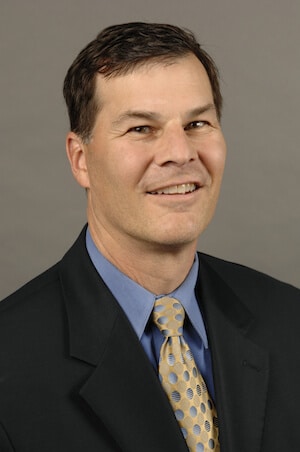
At New England Cosmetic Surgery & Laser Center, board-certified facial plastic surgeon John B. Lazor, M.D., M.B.A., F.A.C.S., offers Botox and Dysport injections to safely soften these lines at their source. Using a precise, anatomy-guided technique built on more than two decades of surgical training, Dr. Lazor helps patients in Weymouth, MA and throughout the South Shore achieve smoother, more rested-looking skin with natural results and virtually no downtime.
What Causes Frown Lines and Forehead Creases?
Every time you frown, squint, or raise your eyebrows, the muscles beneath your skin contract and fold the skin above them. In your twenties, that skin recovers thanks to high collagen production and strong elastin fibers. By your mid-thirties, that recovery slows, and repeated muscle contraction combined with declining collagen means the fold starts to leave a trace, first only during expression, and eventually even when your face is relaxed.
Several factors accelerate this process:
- Genetics plays a role in how early these lines appear and how deep they become
- Sun exposure and years of repetitive expression, especially around the eyes and forehead, weaken the skin’s structural support
- Stress and tension can increase how often certain muscles contract, and these areas are often the first patients want addressed
This is an extremely common concern. Botulinum toxin type A procedures like Botox and Dysport reached 4.7 million in the United States in 2023 alone, a 6 percent increase from the year before, according to the American Society of Plastic Surgeons. Worldwide, botulinum toxin remains the most requested nonsurgical treatment across all age groups, and it’s especially popular among patients between 35 and 50.
What Are Botox and Dysport?
BOTOX® Cosmetic: A BOTOX® Cosmetic treatment is a simple, non-surgical procedure that smoothes the deep, persistent lines between your brows that develop over time. Injections are given in the forehead (horizontal lines), glabella (frown lines), and the outer corner of the eyes (crow’s feet). Results appear within 3-14 days and can last up to 6 months.
Dysport® is an injection used to temporarily improve the look of your moderate to severe frown lines without changing the look of your whole face. The untreated facial muscles still work normally, allowing you to freely show facial expressions, such as smiling, in untreated areas.
How Do Botox and Dysport Work?
Botox and Dysport work in largely the same way, temporarily blocking the nerve signal that tells a targeted muscle to contract. Botox has the longest track record of the two in the United States, having received FDA approval for cosmetic use in 2002.
Dysport followed several years later, receiving FDA approval for facial treatment in 2009, after nearly two decades of use abroad for neurological and ophthalmic conditions. Dysport tends to spread slightly further from the injection point, which can make it a strong option for larger areas like the full forehead, while requiring a more precise hand in smaller areas like the crow’s feet.
Benefits of Botox and Dysport Treatment
Targeted Line Reduction
Both treatments are selectively injected into the muscles that cause your frown lines, forehead creases, or crow’s feet, allowing for individualized results.
Non-Surgical and Minimally Invasive
No incisions or general anesthesia are required. Treatment is performed comfortably in the office with minimal interruption to your routine.
Minimal Downtime
Most patients return to work and normal activities immediately after treatment.
Anatomy-Guided Technique
Treatment is guided by Dr. Lazor’s surgical understanding of facial muscle interplay, helping avoid the frozen or asymmetric look associated with less experienced injectors.
Gradual, Natural-Looking Results
Results build over one to two weeks rather than appearing all at once, allowing skin to look progressively more rested rather than suddenly altered.
Flexible, Temporary Treatment
Botox and Dysport are both temporary, so your treatment plan can evolve as your goals and face change over time.
What About Other Neuromodulators?
XEOMIN® is a prescription medication used in facial aesthetics to temporarily improve the appearance of moderate to severe glabellar frown lines between the eyes (glabellar lines) in adults.
Jeuveau® (prabotulinumtoxinA) is a neuromodulator approved by the FDA in 2019, sometimes referred to as “Newtox” as the newest entrant in the category. It works through the same basic mechanism as Botox and Dysport, primarily targeting glabellar frown lines between the brows. Formulation differences from older products can make it appealing to patients curious about newer options on the market.
Daxxify® (daxibotulinumtoxinA) received FDA approval in 2022 and is notable for a longer duration of effect than most other neuromodulators, with results often cited around six months. Its formulation is stabilized with a peptide rather than the accessory proteins used in some other products.
Botox vs. Dysport: Which Is Right for You?
Both neuromodulators work by interrupting the same basic signal. Nerves normally release a chemical messenger called acetylcholine to tell a muscle to contract. Botox and Dysport limit the release at the injection site, so the targeted muscle can’t contract with its usual strength, allowing the skin above it to stay smoother while nearby, untreated muscles continue moving normally. They’re not interchangeable, though, and the right one for you depends on your anatomy, your goals, and how your muscles respond to treatment.
Botox
Botox includes accessory proteins that some patients metabolize slightly differently than Dysport, and dosing between the two isn’t a simple one-to-one conversion as a result. Its track record and small-unit dosing make it a common choice for smaller, more delicate areas.
Dysport
Dysport tends to spread a bit further from the injection point than Botox. This can make it especially effective for treating larger areas, like the full forehead, with fewer injection points, while still requiring an experienced hand near the eyes.
Neither option is inherently better. The right choice comes down to your specific muscle strength, the size of the area being treated and your prior experience with either product, all of which Dr. Lazor evaluates during your consultation instead of defaulting to one product for every patient.
What to Expect With Botox or Dysport Treatment
Consultation
Your experience begins with a personalized consultation at New England Cosmetic Surgery & Laser Center. Dr. Lazor examines your face at rest and in motion, watching how your specific muscles move when you frown, raise your brows or smile, since muscle strength and movement patterns vary from patient to patient.
This appointment typically includes reviewing your medical history, assessing the muscles responsible for your specific lines, and discussing realistic outcomes based on your goals. In the days before treatment, we may ask you to pause NSAIDs and blood-thinning supplements like fish oil or St. John’s Wort, since these can increase the chance of bruising at the injection sites.
During Your Treatment
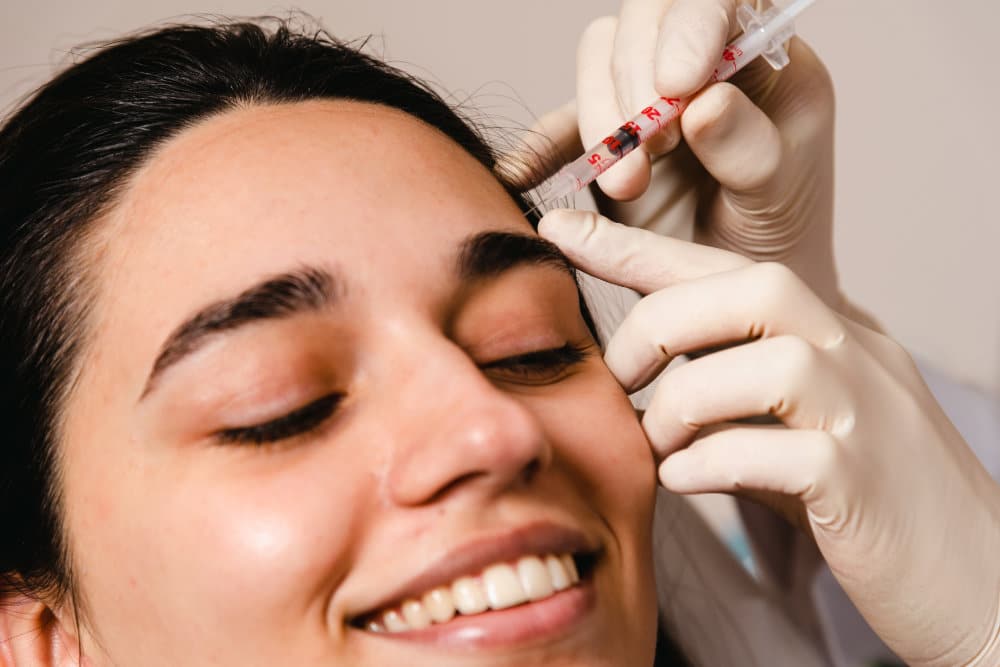
Treatment is performed in the office and does not require anesthesia. A fine needle delivers small, targeted amounts of product directly into the muscles responsible for the lines that bother you. Most patients describe the sensation as a brief pinch rather than significant pain. Treatment typically takes fifteen to twenty minutes.
Recovery and Results
There’s no meaningful downtime. You can return to work or your routine immediately afterward, though we’ll ask you to avoid lying down, vigorous exercise, and rubbing the treated area for a few hours. Most patients begin noticing softening within several days, with full results settling in over the following one to two weeks. Results typically remain visible for three to four months before the treated muscles gradually regain their normal activity.
Who Is A Good Candidate For Botox Or Dysport?
You may be a good candidate for Botox or Dysport if you:
- Have moderate to severe frown lines, forehead lines, or crow’s feet
- Want to soften expression lines before they become permanent, static creases
- Are in good overall health and free from certain neuromuscular conditions
- Have realistic expectations about gradual, natural-looking improvement
- Want a non-surgical option with virtually no downtime
Botox and Dysport are not appropriate for children or for women who are pregnant or breastfeeding. During your consultation, we’ll also review your medical history to confirm you haven’t received another botulinum toxin treatment within the past four months, since spacing between treatments matters for both safety and results.
During your consultation, Dr. Lazor will assess your muscle strength, skin quality and treatment goals to determine whether Botox, Dysport or an alternative approach will provide the most effective outcome for you.
How Much Does Botox or Dysport Cost?
The cost of treatment varies based on the number of units required, the areas being treated, and which product is used. Dysport is formulated at a lower concentration than Botox, so more units are typically needed to achieve a comparable result. Those units are priced lower per unit, though, so the total treatment cost between the two tends to fall within a similar range.
Because every patient’s muscle strength and anatomy are different, pricing is determined after a personalized evaluation instead of a flat rate that applies to everyone. In most cases, Botox and Dysport are considered cosmetic and are not covered by insurance. Our team will review all costs in detail so you can make an informed decision with confidence.
Frequently Asked Questions About Botox and Dysport
Can Botox or Dysport be combined with other treatments?
Yes. Many patients pair Botox or Dysport with dermal fillers, laser treatments or other skin rejuvenation services as part of a broader plan. Combining treatments can address multiple concerns in a single visit, and we’ll walk you through sequencing and spacing during your consultation.
How far in advance of a big event should I schedule treatment?
Since results take one to two weeks to develop fully, we recommend scheduling at least two to three weeks before any event you’re preparing for. This gives us time to see how you respond and make small adjustments if needed before the big day.
Do results change with repeated treatments over time?
Some patients find that consistent, regular treatment gradually trains the treated muscles to contract with less force, which can make results last slightly longer between visits. This varies from person to person and depends on muscle strength and treatment history.
Can Botox or Dysport help prevent new lines from forming?
By limiting repetitive muscle movement, these treatments may help slow the formation of new dynamic lines in treated areas over time. They’re most effective on movement-related wrinkles rather than lines caused by sun damage or volume loss, which require different treatment approaches.
Is treatment safe for all skin tones and skin types?
Yes. Botox and Dysport work on the underlying muscle rather than the skin’s pigment, so they’re appropriate for all skin tones and types. Your candidacy depends on your health history and muscle anatomy, not your complexion.
What’s the difference between Botox or Dysport and dermal fillers?
Botox and Dysport soften lines caused by muscle movement, while fillers restore volume and address lines or hollows present even when your face is at rest. Because they target different underlying causes, the two are often used together for more complete results.
Why Choose New England Cosmetic Surgery & Laser Center For Botox and Dysport?
Choosing where to receive Botox or Dysport is just as important as deciding to pursue treatment. At New England Cosmetic Surgery & Laser Center in Weymouth, Massachusetts, patients benefit from physician-led care built on real expertise in facial anatomy, not a standardized injection protocol.
Treatment is provided by John B. Lazor, M.D., M.B.A., F.A.C.S., a double board-certified facial plastic surgeon and Instructor at Harvard Medical School. Every patient’s treatment plan reflects that background, shaped around their specific anatomy from consultation through follow-up.
Schedule Your Botox or Dysport Consultation in Weymouth, MA
Frown lines and forehead creases do not have to define how tired or tense you look. With precise, anatomy-guided Botox or Dysport treatment, unwanted lines can be safely softened while your natural range of expression is fully preserved.
At New England Cosmetic Surgery & Laser Center, John B. Lazor, M.D., M.B.A., F.A.C.S., provides personalized care grounded in surgical experience, precision, and aesthetic judgment. Contact us today to schedule your consultation, or call (781) 337-5665 to speak with our team directly. We see patients from throughout Weymouth, the greater South Shore and the Boston area.