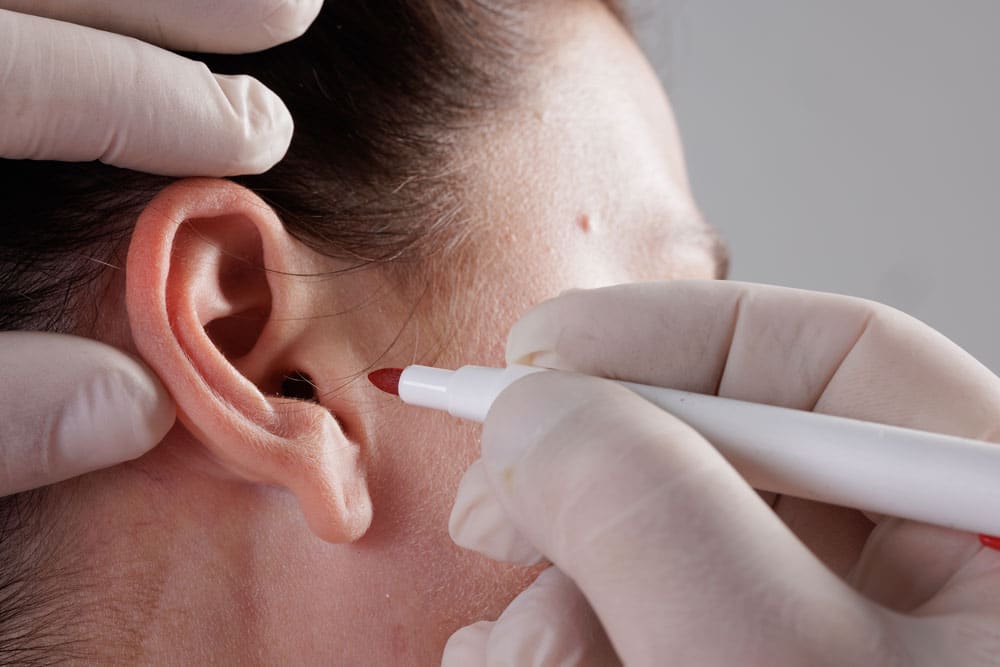
For children and adults alike, prominent, asymmetrical or misshapen ears can become a lasting source of self-consciousness. What began as playground teasing can carry into adolescence and adulthood, quietly shaping the way a person carries themselves in photographs, at work or in social settings. Otoplasty offers a permanent, single-procedure solution: correcting the shape, size or position of the ears to create a more balanced, natural profile.
At New England Cosmetic Surgery & Laser Center, board-certified facial plastic surgeon John B. Lazor, M.D., M.B.A., F.A.C.S., performs otoplasty for patients of all ages throughout Weymouth, Massachusetts and the South Shore.
What Is Otoplasty?
Otoplasty, sometimes called ear pinning surgery, is a surgical procedure that reshapes, repositions or resizes the ears to improve facial balance. Unlike many facial procedures that address the visible signs of aging, otoplasty most often corrects concerns present from birth or caused by injury. During the procedure, Dr. Lazor makes precise adjustments to the cartilage and skin behind the ear, setting protruding ears closer to the head, reducing oversized ears or reconstructing ears affected by trauma.
Because the incision is placed in the natural crease behind the ear, the resulting scars are well camouflaged. Once healing is complete, the new shape and position of the ear remain stable for life, which is part of why otoplasty consistently ranks among the more predictable procedures in facial plastic surgery.
Common Ear Concerns Otoplasty Can Correct
Otoplasty addresses a range of aesthetic and reconstructive concerns, and no two treatment plans look exactly alike. During your consultation with Dr. Lazor, your ear anatomy, facial proportions and goals will guide the surgical approach.
Protruding Ears
Surgery to the ear is usually performed for protuberant or prominent ears, typically resulting from an underdeveloped antihelical fold or an overdeveloped conchal bowl. Surgery recreates the natural fold and reduces the bowl to bring the ears closer to the head.
Asymmetrical Ears
Mild differences between the two ears are common and rarely noticeable, but more pronounced differences in size, shape or projection can be corrected for better facial balance.
Macrotia, Or Oversized Ears
Reduction otoplasty removes excess cartilage and skin while preserving the ear’s natural contours and proportion to the rest of the face.
Congenital Deformities
Conditions such as microtia and other structural differences present at birth can be addressed with reconstructive otoplasty techniques that rebuild or reshape the ear.
Earlobe Irregularities
Elongated, torn or stretched earlobes, whether from aging, heavy earrings or gauges, can be repaired and reshaped during the same visit.
Post-Traumatic Deformities
Injuries that damage ear cartilage can leave lasting changes in shape. Reconstructive otoplasty restores a more natural appearance following trauma.
Is Otoplasty Right for Children, Teens or Adults?
This can be performed in children or adults. In children, it is usually performed after the ear has reached full size, which is usually around five to six years of age.
Children
The timing of the surgery for a child is important to limit or reduce the psychological issues that often arise in school-age children. From there, many families choose to move forward at any time through early adolescence, often before a child starts a new school or grade level, to reduce the risk of teasing during formative social years. According to a University of Pennsylvania study cited by the Children’s Hospital of Philadelphia, 97 percent of children reported feeling happier after otoplasty, and 92 percent reported feeling more confident, with 100 percent reporting less bullying or teasing following surgery.
Adults
Adults pursue otoplasty for many of the same reasons, often after years of styling their hair to conceal their ears. Some are correcting a previous otoplasty performed elsewhere or addressing an ear injury, while others are simply ready to stop working around a feature that has bothered them since childhood. There is no upper age limit for the procedure, and adult patients frequently report the same gains in confidence as younger patients.
Teenagers
Teenagers are typically strong candidates too, since ear cartilage has usually finished developing well before the rest of the face. Dr. Lazor takes care to involve teen patients directly in that decision rather than treating it as one made solely by a parent. During your consultation, he will evaluate your ear anatomy, facial proportions and goals to determine the most appropriate surgical plan, regardless of your age.
Benefits of Otoplasty
Beyond correcting the shape or position of the ears, otoplasty offers a range of benefits that extend into daily confidence and quality of life.
Permanent Results From A Single Procedure
Once the ears have healed, the new shape and position remain stable for life, without the need for maintenance treatments or repeat visits down the road.
Improved Facial Harmony
By bringing the ears into better proportion with the rest of the face, otoplasty creates a more balanced overall profile rather than isolating attention on a single feature, so the results tend to look like a natural extension of the patient’s own anatomy.
Freedom From Styling And Concealment
Many patients spend years choosing hairstyles, hats or headbands specifically to hide their ears. Otoplasty removes the need for that ongoing workaround, opening up hairstyles and looks that were previously off the table
A One-Time Investment Rather Than An Ongoing Routine
Because results are permanent, otoplasty replaces years of concealment habits with a single, well-planned procedure, rather than an expense or routine that continues indefinitely.
Flexibility To Combine With Other Procedures
Depending on your goals and candidacy, otoplasty can sometimes be planned alongside other facial procedures, which Dr. Lazor can evaluate during your consultation to help streamline your overall recovery timeline.
What to Expect With Otoplasty at New England Cosmetic Surgery & Laser Center
Consultation and Surgical Planning
Every otoplasty begins with a thorough consultation with Dr. Lazor. During this visit, he will examine the ears and surrounding facial structures, discuss your concerns and aesthetic goals, take photographs for surgical planning and review your medical history to confirm candidacy. For pediatric patients, this conversation includes a discussion of appropriate timing and what to expect during recovery at different ages. By the end of the consultation, you will have a customized surgical plan and a clear picture of what the procedure involves.
The Otoplasty Procedure
Otoplasty is typically performed as outpatient day surgery. The surgery is usually performed under general anesthesia for children and can be performed with sedation or under general anesthesia for adults. It is a day surgery with the individual returning home that day.
For protruding ears, Dr. Lazor places a discreet incision behind the ear, removes any excess skin and reshapes the underlying cartilage. Sutures are then used to create or reinforce the antihelical fold and reduce the conchal bowl, bringing the ear into better proportion with the head. When the goal is reducing ear size, cartilage and skin are carefully trimmed while preserving the ear’s natural contours. The area is then closed and dressed to support healing.
The incision is placed behind the ear and is well camouflaged in the skin crease. A dressing is worn for several days afterward.
Recovery After Otoplasty
Following surgery, the ears are covered with a protective dressing for several days. Once removed, most patients wear a soft headband, particularly at night, for several additional weeks to keep the ears from being pulled forward during sleep. Mild discomfort, swelling and bruising are common in the first week or two and typically respond well to prescribed pain management. Any non-dissolving sutures are usually removed after about a week.
During recovery, patients are advised to sleep with the head elevated, avoid vigorous physical activity for approximately three weeks, hold off on swimming until fully healed and protect the ears from extreme cold. Children generally return to school within a week, while adults often resume work within three to five days, depending on the physical demands of their job. As with all procedures at New England Cosmetic Surgery & Laser Center, Dr. Lazor and his clinical team provide detailed aftercare instructions and remain available throughout the healing process.

How Much Does Otoplasty Cost?
The cost of otoplasty depends on several factors, including whether one or both ears are being treated, the complexity of the correction, the type of anesthesia used and whether the procedure is being performed for cosmetic or reconstructive reasons. Reconstructive otoplasty performed to correct a congenital condition or injury may be partially covered by insurance, while cosmetic otoplasty is generally considered an elective, out-of-pocket procedure.
Because every case is different, pricing is determined after a personalized consultation. At that visit, Dr. Lazor and his team will outline the full scope of your treatment plan and walk through the associated costs and available payment options so that you can move forward with confidence.
Frequently Asked Questions About Otoplasty
Is otoplasty painful?
Most patients describe post-operative discomfort as mild to moderate, and it is generally well managed with prescribed medication during the first several days of recovery. Any lingering tightness or tenderness around the ears typically fades as swelling subsides over the following one to two weeks. Children tend to tolerate the recovery well, particularly with a headband in place to protect the healing ears.
How long do otoplasty results last?
Otoplasty produces permanent results. Once the ears have healed into their new shape and position, they remain stable for life, since the cartilage is surgically reshaped rather than temporarily repositioned. Natural aging can still affect the surrounding skin over the decades that follow, but the underlying correction to ear projection and shape does not reverse.
Will otoplasty affect my hearing?
Otoplasty addresses the visible cartilage and skin of the outer ear and does not involve the ear canal or inner ear structures responsible for hearing. Most patients notice no change in hearing before or after surgery, since the procedure is confined to the outer ear framework rather than any functional hearing anatomy. Patients with a pre-existing hearing condition are still encouraged to mention it during consultation so Dr. Lazor can plan accordingly.
Can otoplasty be performed on just one ear?
Yes. While many patients choose to treat both ears for symmetry, otoplasty can be performed on a single ear when only one side is affected by prominence, injury or a congenital difference. Dr. Lazor will discuss whether unilateral or bilateral surgery best suits your anatomy during your consultation.
How should I prepare for otoplasty?
Preparation varies by patient age and the extent of correction planned, but generally includes avoiding certain medications and supplements that can increase bleeding risk, arranging for a ride home after surgery and having help available during the first few days of recovery. For children, it can also help to talk through the process in age-appropriate terms and plan for a few quiet days at home before returning to school.
Why Choose New England Cosmetic Surgery & Laser Center for Otoplasty?
Ear reshaping surgery requires a precise understanding of cartilage anatomy and facial proportions, along with the judgment to determine how much correction will look natural rather than overdone. At New England Cosmetic Surgery & Laser Center in Weymouth, otoplasty is performed exclusively by John B. Lazor, M.D., M.B.A., F.A.C.S., a double board-certified facial plastic surgeon and Instructor at Harvard Medical School with more than two decades of experience operating on the face and neck.
Dr. Lazor’s approach to otoplasty is shaped by the same reconstructive training he applies to rhinoplasty, blepharoplasty and brow lift surgery: a focus on facial harmony rather than a single standardized technique. Whether treating a child before their first day of kindergarten or an adult who has waited decades to address a longstanding concern, Dr. Lazor and his team provide individualized care from consultation through recovery.
Schedule Your Otoplasty Consultation in Weymouth, MA
Ears that feel out of proportion with the rest of your face do not have to stay that way. With a single, well-planned procedure, otoplasty can bring lasting balance and confidence for children and adults alike. To find out whether otoplasty is right for you or your child, schedule a consultation with John B. Lazor, M.D., M.B.A., F.A.C.S., at New England Cosmetic Surgery & Laser Center.