“I love looking in the mirror and seeing the face I had 15 years ago – amazing!”
D.D. – Braintree

As we age, certain parts of the face will droop, sag, or develop wrinkles. This is most pronounced in the jowl and neck area. Facelift surgery can restore the youthful appearance and structure. At New England Cosmetic Surgery and Laser Center in Weymouth, MA, facelift surgery is designed to address these concerns by restoring structure, improving contour and creating a more refreshed appearance. Each procedure is carefully customized to enhance your natural features while maintaining balance and facial expression, helping you look like a younger, well-rested version of yourself.
What Is a Facelift?
A facelift is a surgical procedure that restores a more youthful facial contour by addressing sagging skin, deep folds, and loss of definition in the lower face and neck. As aging causes your skin and underlying tissues to descend over time, your jawline can soften, jowls may develop and your neck can appear loose or creased.
Facelift surgery repositions deeper facial structures and removes excess skin to create a smoother, more refreshed look while maintaining your natural facial character. The goal is not to change how you look, but to help you look like a younger, well-rested version of yourself.
Facelift vs. Other Facial Rejuvenation Options
Patients often explore multiple treatment options before deciding on facelift surgery. While many non-surgical treatments can improve signs of aging, a facelift addresses facial aging at a deeper structural level. Understanding how a facelift compares to other approaches can help you determine which option best aligns with your goals.
Facelift vs. Injectable Fillers
Dermal fillers are typically used to restore lost volume and soften facial folds. They work well for early signs of aging and targeted enhancements, particularly in the cheeks or around the mouth. However, fillers do not correct significant skin laxity or reposition sagging tissue.
A facelift physically lifts and repositions the deeper facial structures while removing excess skin. This allows for more comprehensive correction of jowls, loose skin and loss of jawline definition that fillers alone cannot achieve.
Facelift vs. Botox
Botox improves wrinkles caused by repetitive facial movement, such as forehead lines and crow’s feet, by relaxing targeted muscles. It is effective for dynamic expression lines but does not address sagging skin or volume loss.
A facelift focuses on structural aging rather than muscle movement. For this reason, Botox and facelift surgery are often used together to address both surface wrinkles and deeper facial changes.
Facelift vs. Non-Surgical Skin Tightening
Energy-based skin tightening treatments can improve mild laxity by stimulating collagen production over time. These treatments may help maintain skin quality but typically produce subtle results.
A facelift provides more noticeable, longer-lasting improvement by addressing the underlying causes of facial sagging. It is often recommended for patients with moderate-to-advanced signs of aging who want more dramatic rejuvenation.
What to Expect With Facelift Surgery
Consultation
Your experience begins with a private consultation with Dr. Lazor, where your facial anatomy, skin quality, and aesthetic goals are carefully evaluated. During this visit, Dr. Lazor will:
- Review your medical history to confirm surgical candidacy
- Examine facial structure, skin laxity and areas of volume loss
- Discuss which areas of the face and neck would benefit most from surgical correction
- Explain realistic outcomes and surgical options based on your needs
This consultation allows time to ask questions, review before-and-after photos, and understand how facelift surgery fits into your overall rejuvenation plan. Dr. Lazor designs your facelift plan to enhance your natural features while preserving facial balance and expression.
During Your Procedure
Facelift surgery is performed in a controlled surgical setting with patient safety and comfort as top priorities. The procedure is customized to your facial structure and typically focuses on repositioning deeper tissues, refining contours, and removing excess skin.
Incisions are placed strategically along the hairline and natural creases to remain discreet. The underlying facial support structures are adjusted to restore youthful definition, and the skin is redraped smoothly without tension. The procedure length varies depending on the extent of correction and whether additional treatments are performed at the same time.
Recovery
Recovery from a facelift occurs in stages. Most patients rest at home for the first one to two weeks while swelling and bruising subside. Light daily activities can usually be resumed during this period, with a gradual return to normal routines as healing progresses.
Follow-up appointments are scheduled to monitor recovery and remove sutures if needed. You may be advised to avoid strenuous activity, bending or heavy lifting for a short period. As swelling continues to resolve, facial contours become more defined and natural.
Results continue to improve over several months, with scars softening and blending into surrounding tissue. Most patients enjoy long-lasting rejuvenation and a more youthful facial appearance that remains consistent with their natural features.
How to Prepare for Facelift Surgery
Proper preparation helps ensure a smooth surgical experience and supports optimal healing after your facelift. In the weeks before your surgery, we will examine your medical history, medications and lifestyle factors to confirm that facelift surgery is appropriate and safe for you. Following preoperative instructions carefully can reduce complications and improve recovery.
Medications and Supplements to Avoid
Particular medications and supplements can increase bleeding and bruising during and after surgery. You may be asked to stop taking aspirin, ibuprofen, and other non-steroidal anti-inflammatory medications, as well as supplements such as fish oil, vitamin E, ginkgo and garlic, for a period of time before surgery.
If you take prescription medications, including blood thinners, do not stop them unless instructed otherwise. Dr. Lazor will provide clear guidance on what should be paused and what must be continued.
Alcohol and Smoking
Alcohol and nicotine can interfere with circulation and slow the body’s natural healing process. Patients are encouraged to avoid alcohol in the days leading up to surgery and to stop smoking well in advance of their procedure. Avoiding nicotine before and after surgery supports proper blood flow, reduces the risk of complications, and promotes better scar healing.
Scheduling and Planning
Facelift surgery requires recovery time, so planning ahead is important. You should arrange for time off work, help at home if needed, and transportation to and from your procedure. If you have social or professional commitments, scheduling surgery well in advance allows swelling and bruising to resolve before important events.
Dr. Lazor discuss expected downtime and help you plan a timeline that fits your lifestyle and recovery goals.
Day of Surgery
On the day of your procedure, arrive with clean skin and no makeup, lotions or skincare products. Wear comfortable clothing that fastens in the front to avoid pulling garments over your head after surgery.
You will receive specific instructions regarding eating, drinking and medications before surgery. Our team will review all steps with you to ensure you feel prepared throughout the process.
Facelift Techniques and Customization
No two faces age the same way, which is why facelift surgery is fully customized. Dr. Lazor tailors each procedure to the patient’s facial structure, degree of skin laxity, and individual concerns.
Mini Facelift
For patients with early-to-moderate signs of aging, a mini facelift may be an appropriate option. This approach focuses on the lower face and jawline using shorter incisions and a more limited degree of tissue repositioning. A mini facelift can provide subtle refinement with reduced downtime, making it well-suited for patients who do not yet require a full facelift.
Traditional Facelift
For more advanced aging, a traditional facelift offers more comprehensive correction. Incisions are inconspicuous and well camouflaged. They begin in the hairline near the temple and extend down in front of the ear. The incision continues under the earlobe, behind the ear, and into the hairline.
The incisions are inconspicuous and well camouflaged. They begin in the hairline near the temple and extend down in front of the ear. The incision continues under the ear lobe, back behind the ear and into the hairline.
The procedure is tailored and modified to the individual needs of each patient. The skin is elevated so that the underlying muscle and tissues (SMAS) can be repositioned and tightened to restore the natural contours that contribute to a more youthful appearance. At the same time, fat can be removed. The excess skin is trimmed and redraped to a more natural appearing position to smooth out your facial skin. For men, the incisions are placed in natural creases that do not disturb the natural beard lines.

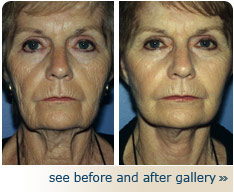 A facelift can be performed alone or in conjunction with other procedures such as a forehead lift, eyelid surgery, or nose reshaping. Dr. Lazor designs and tailors each operation to the individual needs, thus providing a very natural appearance.
What Are the Risks and Side Effects of Facelift Surgery?
After facelift surgery, it is normal to experience swelling, bruising, tightness and mild discomfort in the treated areas. These effects are expected as part of the healing process and gradually improve over time. Temporary numbness or firmness along incision lines may also occur as tissues settle and nerves recover.
Swelling is most noticeable during the first one to two weeks and continues to resolve over several weeks. Incisions are carefully placed and tend to fade progressively with proper care. Dr. Lazor will provide detailed postoperative instructions to support healing, minimize complications, and promote optimal results.
As healing progresses, facial contours soften and refine. The final outcome develops gradually, revealing a natural, refreshed appearance rather than an abrupt or artificial change.
Who Is a Good Candidate For a Facelift?
You may be a good candidate for facelift surgery if you:
- Notice sagging along the jawline or neck
- Have deep facial creases or jowls that cannot be corrected with non-surgical treatments
- Are in good overall health
- Do not smoke or are willing to stop before and after surgery
- Have realistic expectations about results
During your consultation, Dr. Lazor will evaluate your facial anatomy, skin quality and goals to determine whether a facelift or another procedure will best meet your needs.
Frequently Asked Questions About Facelifts
How long do facelift results last?
Facelift results are long-lasting and typically remain noticeable for many years. While the natural aging process continues, the procedure effectively resets facial aging so you continue to look younger than if surgery had not been performed.
Am I too young or too old for a facelift?
There is no specific age requirement for facelift surgery. Candidacy is based on facial anatomy, skin quality, overall health and individual goals rather than age alone.
How soon will I see results after surgery?
Initial improvements are visible once early swelling begins to subside, usually within the first few weeks. Final results continue to refine over several months as swelling fully resolves and tissues settle into their new position.
Is facelift surgery painful?
Most patients describe discomfort rather than pain. Tightness and soreness are common during early recovery and are typically well controlled with prescribed medication and proper postoperative care.
Why Choose New England Cosmetic Surgery and Laser Center for a Facelift?
Choosing the right surgeon for your facelift is one of the most important decisions you can make. At New England Cosmetic Surgery and Laser Center in Weymouth, Massachusetts, patients receive expert care grounded in advanced surgical technique, aesthetic judgment and a deep understanding of facial anatomy.
Dr. John B. Lazor is a double board-certified facial plastic surgeon and an Instructor at Harvard Medical School. With decades of experience in facial rejuvenation and reconstructive surgery, Dr. Lazor is known for results that restore youthful contours while preserving each patient’s natural features. His approach emphasizes balance and proportion rather than overcorrection, allowing patients to look refreshed without appearing surgically altered.
Every facelift procedure is carefully planned and tailored to the individual. From consultation through recovery, patients are supported by a skilled surgical team that prioritizes safety, comfort and long-term satisfaction. This personalized approach helps ensure outcomes that look natural, harmonious, and consistent with how you see yourself.
Restore Youthful Contours With Facelift Surgery
Facelift surgery offers a lasting solution for sagging skin, jowls, and loss of definition that cannot be fully corrected with non-surgical treatments. By addressing deeper facial structures and excess skin, a facelift can restore a more youthful appearance while maintaining natural expression.
If you feel that your outward appearance no longer reflects how youthful and energetic you feel inside, a personalized facelift consultation can help you explore your options. The team at New England Cosmetic Surgery and Laser Center is committed to helping you achieve refined, natural-looking results through thoughtful surgical care and individualized treatment planning.